Why Intuitive Eating Fails for Many Body Recomposition Clients

Before You Trust Your Hunger
“Just listen to your body.”
At first glance, that sounds like good nutrition advice.
Eat when you’re hungry. Stop when you’re full. Don’t overthink it. Don’t obsess over tracking. Trust your internal cues.
And to be clear, intuitive eating is not inherently wrong.
Some clients can eat intuitively, maintain a healthy body composition, fuel training properly, regulate hunger well, and make solid food decisions without tracking every gram of food.
But here’s where many coaches make a mistake:
They assume their own intuition transfers to their clients.
If you’re a coach or trainer, you probably have years of nutritional awareness built in. You understand protein. You understand portions. You have a sense of calorie density. You know which foods keep you full. You know what overeating feels like before it becomes extreme.
So when intuitive eating works for you, it’s easy to assume your clients should be able to do the same.
But for many body recomposition clients, that assumption breaks down quickly.
They are being told to trust hunger and fullness signals they may not yet know how to interpret. Worse, those signals may be distorted by years of dieting, high stress, poor sleep, hyperpalatable foods, inconsistent meal structure, low nutritional awareness, and appetite-related hormone signaling.
This is why intuitive eating for body recomposition is often not the starting point.
For many clients, it is the destination.
WATCH THE FULL VIDEO BELOW
Intuitive Eating Is Not Always the Starting Point
Body recomposition requires a client to lose fat while building or maintaining muscle.
That means nutrition needs to support several goals at once:
- enough protein to support lean mass
- enough energy to train productively
- enough structure to maintain a calorie target
- enough flexibility to remain adherent
That is already a more demanding context than simple weight maintenance.
So when a coach tells a client to “just eat intuitively,” the advice may sound empowering, but it skips a major question:
Are this client’s internal signals reliable enough to guide intake toward the goal?
For some clients, yes.
For many general population clients, no.
A client who has strong nutritional awareness, stable eating patterns, good sleep, low emotional food reactivity, and a supportive food environment may do very well with a more intuitive approach.
But a client who skips meals, under-eats protein, overeats at night, has high stress, keeps hyperpalatable foods around the house, and has no idea what portions look like is in a different situation.
That client may not need less structure.
They may need better structure.

YES, I WANT TO BECOME A BODY RECOMP SPECIALIST
Appetite Regulation Is Not Just Willpower
A common mistake in nutrition coaching is treating appetite as if it is purely a conscious decision.
The client feels hungry, so they eat.
The client feels full, so they stop.
Simple.
Except that appetite regulation is not purely conscious.
It is influenced by physiology, environment, behavior, and emotional state. Stress, sleep quality, dieting history, meal structure, body composition, food availability, and food reward all shape how hunger and fullness are experienced.
This matters because when a client says:
“I know what to do, I just don’t do it.”
Or:
“I don’t know why I keep overeating at night.”
That does not automatically mean they lack discipline.
Their hunger cues, reward signals, and food environment may be working against them.
That does not remove responsibility. But it does give the coach a better problem to solve.
Instead of saying, “try harder,” the coach needs to ask:
What is making this client’s appetite harder to regulate?
When Fullness Signals Fail
One reason intuitive eating can fail is that fullness signaling may not be functioning as cleanly as the client assumes.
Leptin is one example.
Leptin is a hormone produced primarily by adipose tissue. It helps communicate long-term energy availability to the brain and plays a role in appetite regulation, satiety, and energy balance. Leptin acts partly through leptin receptor-expressing neurons in the brain, especially in hypothalamic regions involved in energy balance. (Zhou & Rui, 2013)
In basic terms:
More stored body fat generally means more leptin.
And in a properly responsive system, that should help signal that energy availability is sufficient.
But with higher adiposity, the issue is often not a lack of leptin.
It is reduced sensitivity to the signal. (Genchi et al., 2021)
This is commonly referred to as leptin resistance. Reviews describe obesity as a state often involving hyperleptinemia, impaired leptin signaling, and reduced responsiveness to leptin’s appetite-regulating effects.
That is a major coaching insight.
Because if satiety signaling is blunted, telling a client to “just stop when you’re full” may not be very useful.
The client may not feel the fullness signal clearly.
Or they may feel it too late.
Or they may only recognize fullness after they have already eaten far beyond what supports their goal.
So the issue is not always that the client is ignoring their body.
Sometimes, the signal itself is unclear.
Modern Foods Can Override Satiety
The food environment is another major issue.
Appetite regulation did not evolve in a world where high-calorie, highly rewarding foods were available everywhere, all the time.
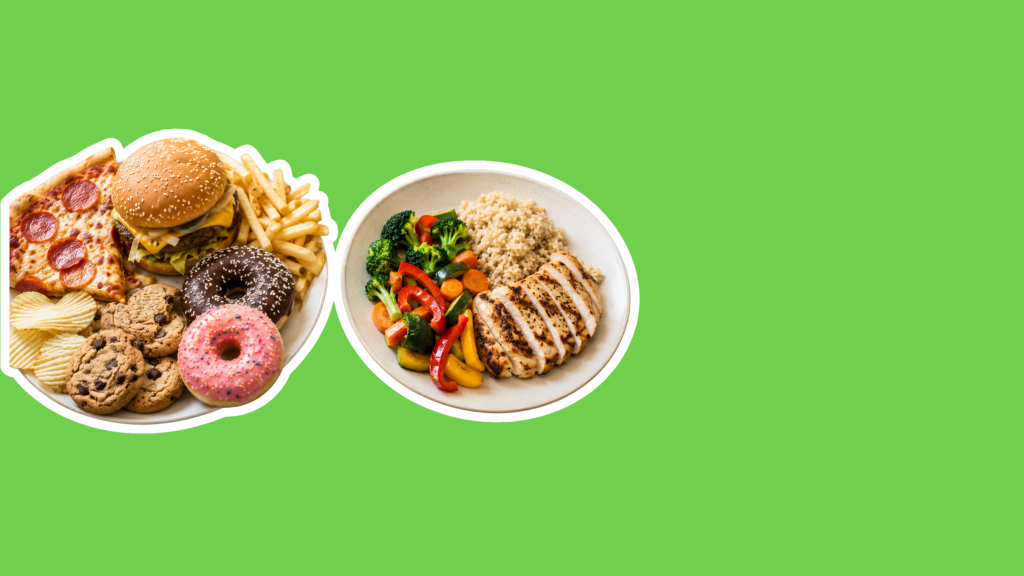
Modern food environments make it easy to access foods that combine fat, sugar, salt, texture, and high caloric density. These foods are often easy to eat quickly, easy to overconsume, and not always filling in proportion to the calories they provide.
This is not just a coaching observation.
In a controlled inpatient randomized trial, participants ate about 500 more calories per day on an ultra-processed diet compared with an unprocessed diet. They also ate faster and gained weight during the ultra-processed diet, while losing weight during the unprocessed diet. (Hall et al., 2019)
That matters for coaches.
Because when a client says, “I don’t feel like I ate that much,” they may be telling the truth from their perspective.
They may not feel stuffed.
They may not feel like they binged.
But calorically, they overshot.
Foods like chips, pastries, ice cream, fast food, and snack foods can deliver calories quickly while creating a strong reward response.
That makes hunger and fullness cues harder to use.
The client is not just “eating foods they like.”
They are navigating a food environment where high-reward foods are easy to access and easy to overconsume.
So when you tell a client to “eat intuitively,” the real question becomes:
Are they listening to reliable hunger and fullness cues?
Or are they living in an environment that makes those cues harder to interpret?
Why Dieting Amplifies Cravings
Another problem is that many body recomposition clients come to coaching with a long history of dieting.
They have skipped meals.
They have cut calories aggressively.
They have gone low carb.
They have tried to “be good” all week, only to overeat on weekends.
Over time, this can change how strongly the brain responds to food.
During restriction, hunger signals often increase. Ghrelin is commonly known for its role in appetite, but research also connects ghrelin signaling to food reward and motivated feeding behavior. (Diz-Chaves, 2011)
That means dieting does not just make someone “hungry.”
It can make food more mentally important.
Food salience increases. Food becomes more noticeable, more interesting, and harder to ignore.
The client starts thinking about meals more often. They scroll recipes. They crave specific foods. They feel like food is always in the background.
Reward sensitivity can also increase, especially toward high-calorie foods.
So now, the exact foods the client is trying to avoid may feel more rewarding than usual. (Perelló & Dickson, 2015)
This is why the advice “just eat normally” can fail after prolonged restriction.
For some clients, food starts to feel more urgent, more rewarding, and harder to ignore.
They may need more structure, more consistent fueling, and a better food environment before intuitive eating becomes realistic again.
Most Clients Lack Two Critical Skills
This is where coaches need to separate two different types of awareness.
Nutritional Awareness
Nutritional awareness answers:
“What am I actually eating?”
This includes understanding:
- protein intake
- macros
- portion sizes
- caloric density
- which foods support satiety
- which foods make overeating more likely
A lot of clients do not have this baseline awareness.
So when they say they are eating “pretty healthy,” that could mean almost anything.
They may be under-eating protein, over-consuming calorie-dense foods, grazing without realizing it, or building meals that do not keep them full.
Without nutritional awareness, the client cannot accurately judge intake.
Self-Awareness Around Food
Self-awareness answers:
“Why am I eating this way?”
This is different.
This includes recognizing:
- emotional triggers
- stress eating
- skipped meals
- high-risk environments
- weekend patterns
- late-night eating
- food decision patterns
For example, a client might believe they have a “discipline problem” at night.
But after looking at their patterns, you realize they skip breakfast, under-eat protein during the day, work through lunch, come home stressed, and keep snack foods visible in the pantry.
That is not just a discipline issue.
That is a structure issue.
And once you see the pattern, the coaching solution becomes clearer.
Tracking Builds Calibration
This is where tracking can be useful.
And to be clear, tracking is not the goal.
The goal is not to have clients weigh every gram of food forever. The goal is not to create rigidity. The goal is not to make clients afraid of eating without an app.
The goal is calibration.
Tracking can teach clients what portions actually look like.
It can show them what 30 to 40 grams of protein looks like in a real meal.
It can reveal which foods are more calorie dense than they realized.
It can expose patterns they were missing, like under-eating early in the day and overeating at night.
In other words, tracking turns vague eating into visible data.
But the coach has to frame it properly.
If tracking becomes punishment, moral judgment, obsession, or permanent dependence, the tool is being misused.
The purpose is not to make the client dependent on tracking.
The purpose is to use tracking long enough to build awareness, improve consistency, and help the client make better decisions without guessing.
Tracking is the tool.
Better self-regulation is the goal.
Intuition Works Better After Structure
This is the key distinction.
Intuitive eating is not bad.
It is just often introduced too early.
Intuition works better after structure because structure gives the client something to learn from.
When a client follows basic meal routines, tracks for a period of time, and pays attention to their intake, they start building awareness.
They learn what enough protein looks like.
They learn what portions actually feel like.
They learn which foods keep them full.
They learn what patterns lead to overeating.
That awareness creates consistency.
Instead of guessing every day, the client has repeatable eating behaviors.
And once those behaviors become more stable, appetite regulation often improves.
Hunger becomes easier to interpret.
Fullness becomes more recognizable.
Cravings become easier to contextualize.
Food decisions become less reactive.
That is when intuition becomes more useful.
Not because the client magically “listened harder,” but because they built the skills that make their internal signals easier to read.
The goal is not to keep people tracking forever.
The goal is to use structure long enough to build the awareness and consistency required for better autonomous eating decisions later.
What Coaches Should Actually Focus On
Low-resolution nutrition coaching sounds like this:
“Just eat intuitively.”
“Try harder.”
“Use more discipline.”
“Follow this meal plan.”
These might sound helpful, but they often miss the real issue.
If a client lacks nutritional awareness, telling them to eat intuitively does not solve the problem.
If their hunger cues are distorted, telling them to trust their body does not solve the problem.
If their environment makes overeating easy, telling them to use more discipline does not solve the problem.
And if you hand them a rigid meal plan, they may follow it temporarily, but they still may not understand how to make decisions once that plan is gone.
The smarter approach is to build the missing skills.
Help them understand what they are eating.
Help them improve meal structure.
Help them reduce environmental friction.
Help them choose foods that improve satiety.
Help them recognize the patterns that lead to overeating.
That is how you build self-regulation.
Not by expecting autonomy immediately, but by developing it progressively.
Because for many clients, intuitive eating should not be the starting point.
It should be the outcome of better coaching.
Final Takeaway
Intuitive eating for body recomposition is not wrong.
But it does require a certain level of readiness.
For many general population clients, hunger and fullness cues are being influenced by stress, sleep, dieting history, food environment, body composition, and low nutritional awareness.
So when coaches treat intuitive eating as the first step, they may accidentally remove the exact structure the client needs to improve those signals in the first place.
The better model is simple:
Structure first.
Awareness second.
Consistency third.
Better regulation fourth.
Then greater intuition.
That is how you build autonomy without guessing.
And that is what high-level nutrition coaching should actually do.
SOURCES
- Zhou, Y., & Rui, L. (2013). Leptin signaling and leptin resistance. Frontiers of Medicine, 7(2), 207–222. https://doi.org/10.1007/s11684-013-0263-5
- Genchi, V. A., D’Oria, R., Palma, G., Caccioppoli, C., Cignarelli, A., Natalicchio, A., Perrini, S., Laviola, L., & Giorgino, F. (2021). Impaired leptin signalling in obesity: Is leptin a new thermolipokine? International Journal of Molecular Sciences, 22(12), 6445. https://doi.org/10.3390/ijms22126445
- Hall, K. D., Ayuketah, A., Brychta, R., Cai, H., Cassimatis, T., Chen, K. Y., Chung, S. T., Costa, E., Courville, A., Darcey, V., Fletcher, L. A., Forde, C. G., Gharib, A. M., Guo, J., Howard, R., Joseph, P. V., McGehee, S., Ouwerkerk, R., Raisinger, K., … Zhou, M. (2019). Ultra-processed diets cause excess calorie intake and weight gain: An inpatient randomized controlled trial of ad libitum food intake. Cell Metabolism, 30(1), 67–77.e3. https://doi.org/10.1016/j.cmet.2019.05.008
- Diz-Chaves, Y. (2011). Ghrelin, appetite regulation, and food reward: Interaction with chronic stress. International Journal of Peptides, 2011, Article 898450. https://doi.org/10.1155/2011/898450
- Perelló, M., & Dickson, S. L. (2015). Ghrelin signalling on food reward: A salient link between the gut and the mesolimbic system. Journal of Neuroendocrinology, 27(6), 424–434. https://doi.org/10.1111/jne.12236

Responses