How Coaches Should Program Supersets for Better Training Efficiency


Why Program Supersets?
How many of your clients have ever come up to you and asked:
“Hey coach…can we make this workout last longer?”
My guess is probably not too many.
For most casual and semi-casual gym-goers (likely 80%+ your current clientele), the bigger challenge is finding enough time to train consistently in the first place. Work, family, commuting, and everything else competing for their attention usually make shorter, more efficient workouts a pretty easy sell.
Think about it.
Why would you want similar results to take MORE time?
If you can build 10lb of muscle and lose 25lb of fat in 9 months instead of 12, wouldn’t that be the most obvious choice?
That is exactly where superset training can be extremely useful.
By pairing exercises intelligently, we can often get through the same amount of productive work in less time without simply cutting exercises or sets from the program.
But simply throwing two random exercises together and calling it a superset does not automatically make the workout more efficient. The pairing still has to make sense… and that is exactly what we’re going to be discussing in this article
Also, superset training isn’t something that is necessarily “reserved” for specific training styles. It’s a programming tool that can be heavily modified to fit most training goals very well, including building muscle and strength.
The difference comes down to exercise selection, rest periods, fatigue management, and knowing when an exercise is better left alone.
ARE YOU PASSIONATE ABOUT TRAINING AND WANT A CAREER IN THE FIELD?

YES, I WANT TO BECOME A PERSONAL TRAINER
What Is Superset Training?
A superset involves alternating between two exercises instead of completing every set of one exercise before moving on.
A traditional setup might look like this:
A) Machine Chest Press
3 x 8-10
Rest: 150 seconds
B) Chest-Supported Row
3 x 8-10
Rest: 150 seconds
With a superset, we could write:
A1) Machine Chest Press
3 x 8-10
Rest: 90 seconds
A2) Chest-Supported Row
3 x 8-10
Rest: 90 seconds
The client performs A1, rests 90 seconds, performs A2, rests another 90 seconds, and returns to A1.
This distinction is important because supersets are often associated with doing two exercises immediately back-to-back.
You can certainly program them that way, but you don’t have to, and in many cases that would be the wrong approach.
When strength or hypertrophy is the goal, you still want enough recovery for the client to perform the next set with enough high-quality effort. Alternating exercises simply allows us to use some of that recovery time more efficiently.
Agonist-Antagonist Supersets Are Usually a Good Place to Start
One of my favourite ways to use superset training is to pair opposing muscle groups.
For example:
A1) Machine Chest Press
A2) Chest-Supported Row
A1) Biceps Curl
A2) Triceps Extension
A1) Leg Curl
A2) Leg Extension
These are commonly referred to as agonist-antagonist supersets.
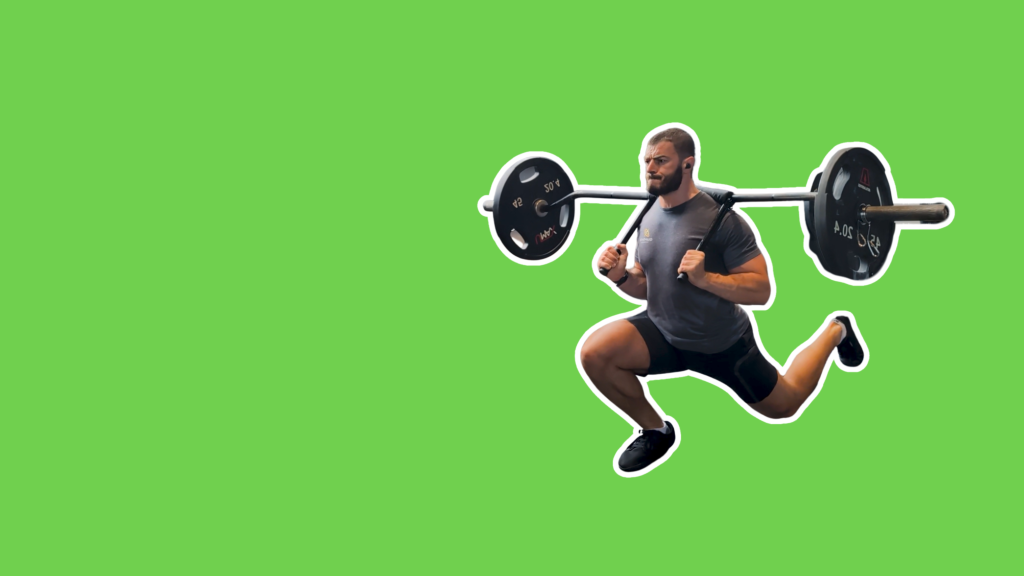
Below is another example of an agonist-antagonist-style lower-body superset that can absolutely work well with a sufficiently trained client.
The Rear-Foot Elevated Split Squat is primarily driven by the quads and glutes, while the Seated Leg Curl directly targets the hamstrings. There is relatively little problematic muscular overlap between the two, and recovery should be adequate as long as some rest is taken between each side of the Split Squat, as well as between the Split Squat and Leg Curl.
That being said, if a client is still learning the Split Squat, or learning a more difficult variation such as the one shown here, it MAY be a better idea to leave it as a stand-alone movement. Saving time is useful, but not if it comes at the expense of execution quality.
The reason why this works is because there is very little direct muscular overlap between the two exercises. While the client is training one muscle group, the opposing musculature gets additional time to recover. This is where much of the time-saving actually comes from.
The research also supports this.
A 2025 systematic review and meta-analysis found that supersets produced similar long-term changes in maximal strength and muscle hypertrophy compared with traditional sets while reducing session duration. The subgroup analysis also found that agonist-antagonist supersets allowed participants to complete more repetitions than traditional sets. (Zhang et al., 2025)
That makes them particularly useful when we want to save time without unnecessarily beating up the performance of the second exercise.
It also explains why a Chest Press and Row generally make more sense together than a Chest Press and Cable Fly, which train the same muscle, and have massive carryover fatigue.
Agonist-Antagonist Pairings May Also Improve Performance
There may be another benefit to agonist-antagonist supersets beyond simply giving one muscle group time to recover.
Training the antagonist immediately before the agonist appears, under certain conditions, to temporarily improve the performance of the muscle that follows.
For example, Maia et al. had participants perform Leg Curls before Leg Extensions. When the Leg Extension followed immediately, or after only 30-60 seconds, participants completed more repetitions than when they performed the Leg Extension on its own. Muscle activation in parts of the quadriceps was also higher during some of the shorter-rest conditions. (Maia et al., 2014)
Other research looking at antagonist “conditioning” contractions has found similar effects.
Kamimura and Takenaka found that performing a moderate-intensity hamstring contraction before a maximal quadriceps contraction increased subsequent knee extension force by roughly 9% compared with the control condition. (Kamimura & Takenaka, 2007)put some numbers to the time-saving argument.
Earlier work also found increases in the rate of force development of an agonist after contracting its antagonist first. (Grabiner, 1994)
So what is happening?
The exact mechanism is still not completely clear.
One proposed explanation involves neural facilitation between opposing muscle groups. Reciprocal inhibition, changes in antagonist co-activation, and increased neural drive to the agonist have all been proposed as possible contributors.
Basically, contracting one side of the joint may temporarily change how effectively the nervous system activates the opposing side immediately afterward.
This does not appear to happen equally across every exercise or setup, and factors like intensity, fatigue and rest intervals seem to matter.
Still, it gives us another reason to favour agonist-antagonist pairings when they make sense.
They are already useful from a time-management perspective because one muscle group can recover while the other works.
The fact that they may also help maintain, or in some cases improve, performance on the following exercise is just the cherry on top.
How Much Time Can Superset Training Actually Save?
This is probably the biggest practical advantage of supersets, so let’s put some numbers to the time-saving argument.
A) Leg Press
3 x 10
Rest: 180 seconds
Tempo: 2110
B) Cable Row
3 x 12
Rest: 150 seconds
Tempo: 2110
C) Leg Curl
3 x 8
Rest: 150 seconds
Tempo: 3010
D) Incline Press
3 x 8
Rest: 150 seconds
Tempo: 2110
Step 1 will be to add up the time of each set, by simply multiplying the tempo with the number of reps.
Each tempo works out to four seconds per repetition, so for A) Leg Press, we can simply do 4 seconds x 10 reps = 40 seconds per set.
To keep the calculation realistic, I’m only counting rest periods that actually occur between working sets. There is no reason to add three minutes of rest after the third set of Leg Press if the client is finished with the exercise.
We will also leave equipment setup and transitions out of the equation for now.
Traditional Straight Sets
Leg Press
3 sets x 10 reps x 4 seconds = 120 seconds of work
2 rest periods x 180 seconds = 360 seconds
Total: 8:00
Cable Row
3 x 12 x 4 seconds = 144 seconds of work
2 x 150 seconds = 300 seconds
Total: 7:24
Leg Curl
3 x 8 x 4 seconds = 96 seconds of work
2 x 150 seconds = 300 seconds
Total: 6:36
Incline Press
3 x 8 x 4 seconds = 96 seconds of work
2 x 150 seconds = 300 seconds
Total: 6:36
The four exercises take approximately:
28 minutes and 36 seconds
Now let’s pair them.
Superset Version
A1) Leg Press
3 x 10
Rest: 90 seconds
A2) Cable Row
3 x 12
Rest: 90 seconds
B1) Leg Curl
3 x 8
Rest: 90 seconds
B2) Incline Press
3 x 8
Rest: 90 seconds
For the A1/A2 pairing, we have 264 seconds of actual lifting and five 90-second rest periods between the six working sets.
A1/A2 total: 11:54
For B1/B2, we have 192 seconds of lifting and another five 90-second rest periods.
B1/B2 total: 10:42
The superset version takes:
22 minutes and 36 seconds
That saves six minutes, or roughly 21% of the training time, across only four exercises.
Over a longer workout, or across several training sessions each week, that starts to add up.
Research comparing superset and traditional resistance training supports this time-efficiency advantage, with supersets producing substantially greater work per unit of time. (Zhang et al., 2025)
There is another detail worth noticing.
The Leg Press only has 90 seconds of prescribed rest before the Cable Row, but the client does not return to the Leg Press 90 seconds later.
They rest for 90 seconds, perform approximately 48 seconds of Cable Rows, then rest another 90 seconds.
That gives them roughly 3 minutes and 48 seconds before the next Leg Press set.
So we have shortened the workout considerably without reducing the recovery between sets of Leg Press to 90 seconds.
In fact, there is evidence to support not only time-saving benefit, but performance benefit when supersets are used correctly.
That is where the real usefulness of this setup comes from.
Rest Periods Still Matter
Saving time is useful until the shorter workout starts costing your client too much performance.
A study comparing different rest periods during agonist-antagonist paired sets found that very short rest intervals improved training efficiency but reduced total training volume. Two-minute rest periods provided a better compromise between performance and time efficiency than one-minute rest periods. (Behenck et al., 2022)
That does not mean every superset needs exactly two minutes, as it depends entirely on the exercise chosen and the extent of how hard the client actually pushed themselves.
If your client is performing heavier work and strength is a priority, giving them more time is usually appropriate.
If they are doing Cable Curls and Triceps Extensions for 10-15 reps, they probably do not need the same recovery as they would between heavy sets of Bench Press. In fact, 30-60 seconds of rest would likely be completely fine in this case.
Use the shortest rest period that still allows the client to perform the work properly. Another option is to slowly increase the rest from set to set, as fatigue accumulates over time.
Some Exercises Are Better Left Alone
I generally prefer leaving heavy squats, front squats, deadlifts and similarly demanding exercises as stand-alone movements.
The reason is simply because there is so much happening during these movements.
The client has to brace hard, maintain position, coordinate several joints, produce a large amount of force and recover from an exercise involving a considerable amount of muscle mass.
Adding another demanding exercise during that recovery period can affect the quality of the next set.
This matters even more when the lift itself is a major priority in the program.
If I want a client getting stronger at front squats, I want them reasonably fresh when they front squat.
Later in the workout, I am much more willing to pair machine presses, rows, leg curls, leg extensions, lateral raises, curls and other relatively stable exercises.
They require less setup and generally create fewer problems when alternated with another movement.
There will always be exceptions. An advanced lifter may tolerate certain pairings very well. In some cases, what I like to program is an easy mobility exercise while they rest. Something that is not too taxing, that can help them improve in another area. For example, mobilizing ankles/calves between sets of squats will not likely reduce performance on squats, in fact in many cases might improve it due to improved joint mechanics.
Beginner Clients May Be Better Off With Straight Sets
Superset training also becomes easier to use as clients gain training experience.
Beginners have more to think about.
They are learning how to set up the exercise, control the movement, understand tempo, brace properly, recognize technique breakdown and figure out what different levels of effort actually feel like.
We discussed this in our Beginner vs Experienced Lifter article. More experienced lifters usually have a better understanding of local muscular fatigue, cardiovascular fatigue, joint discomfort and proximity to failure.
That awareness makes alternating exercises much easier.
With a beginner, I may prefer three straight sets simply because I want them focused on the same task for a few minutes. I can watch what changes from one set to the next, make corrections, and give them an opportunity to repeat what they just learned.
Once those skills become more automatic, we have more room to make the workout denser.
On a similar note, choosing the right exercise order is imperative for all experience levels in order to prioritize movements that require the most effort and focus. We talk all about that in our recent article “How to Choose the Best Exercise Order”.
Gym Layout Can Decide Whether a Superset is Feasible
This is one of those programming considerations that many coaches miss. They program a pairing because it sounds good on paper, but that doesn’t mean it fits your client’s machine accessibility.
Two exercises may pair perfectly from a physiological perspective and still be a terrible superset in that particular gym.
If the leg press is on one side of the facility and the cable row is on the other, the pairing becomes awkward.
Busy commercial gyms make this even more problematic.
Trying to occupy two popular machines at the same time during peak hours may simply be unrealistic. Your client also should not have to spend every rest period wondering whether somebody has taken the equipment they were using.
When possible, pair exercises that are close together.
A cable curl and triceps pressdown can often use the same station.
A dumbbell press and dumbbell row require very little moving around.
Leg curl and leg extension machines are frequently positioned near one another.
A good program takes all of these variables into account.
Same-Muscle Supersets Create More Fatigue
Supersets can also pair two exercises targeting the same muscle group. These are known as compound sets.
For example:
A1) Leg Extension
A2) Hack Squat
or
A1) Cable Fly
A2) Machine Chest Press
This is sometimes used as a pre-exhaustion method, where the target muscle is intentionally fatigued before moving into another exercise.
The trade-off is fairly straightforward. The muscle you need for the second exercise is already tired.
The 2025 meta-analysis found that supersets involving exercises with similar biomechanics reduced volume load compared with traditional sets. (Zhang et al., 2025)
A 2022 narrative review on pre-exhaustion training also found no clear long-term advantage for strength or hypertrophy compared with traditional resistance training. (Trindade et al., 2022)
I still use same-muscle supersets when there is a reason for them.
They can save time. They can create a lot of local fatigue quickly. They can also be useful when we deliberately want the target muscle to become the limiting factor sooner.
What I would avoid is assuming that making a muscle burn more means we have automatically made the exercise more hypertrophic.
As we have covered previously, creating high levels of intramuscular mechanical tension is one of the major considerations for muscle growth.
If fatigue from the first exercise substantially reduces the quality of the second, that needs to be understood beforehand.
Upper and Lower Body Supersets Can Work Well Too
The exercises do not necessarily need to involve opposing muscles.
We can also pair exercises that have very little overlap.
For example:
A1) Leg Curl
A2) Incline Press
or
A1) Calf Raise
A2) Lat Pulldown
These pairings can be especially useful in full-body workouts.
The main consideration is total fatigue.
A Romanian Deadlift and Bent-Over Row train different primary muscle groups, but both require grip, trunk stability and a fair amount of work from the spinal erectors.
I probably would not pair them.
Looking only at the target muscle can miss a lot of what makes an exercise fatiguing.
When Superset Training Makes the Most Sense
Supersets become particularly useful when:
- The client has limited training time.
- The exercises have little muscular or systemic overlap.
- The equipment is close enough to make the pairing practical.
- The client has enough experience to manage two exercises without their technique falling apart.
- The rest intervals still allow them to perform hard, productive sets.
- Neither exercise is important enough that it needs to be completely protected from additional fatigue.
The opposite situations should make us a little more cautious.
A beginner learning new movements, a client training in an extremely busy gym, or someone performing heavy technical lifts may get more from traditional straight sets.
There is no requirement to superset an exercise simply because another exercise is available to pair with it.
Final Thoughts
Superset training gives coaches another way to make resistance training fit into a client’s life.
The time savings can be substantial, and current research suggests that properly programmed supersets can produce similar long-term strength and hypertrophy outcomes to traditional sets. (Zhang et al., 2025)
Agonist-antagonist pairings are usually one of the easiest places to start because they limit direct muscular overlap and tend to preserve performance well.
There may also be an acute performance benefit to these pairings, potentially related to neural facilitation. Antagonist preloading has been shown in some studies to improve subsequent repetition performance, muscle activation, force production and rate of force development in the opposing muscle.
Same-muscle supersets create a different fatigue profile and should be programmed with that in mind.
Heavy, technically demanding lifts often benefit from being left alone.
Beginners may need more time with straight sets before constantly alternating between exercises.
Rest periods still need to reflect the difficulty of the work.
And finally, the pairing has to make sense in the gym where your client actually trains.
Used well, supersets allow us to get through more productive training in less time.
For a lot of clients, that alone makes them worth knowing how to program properly.
Sources
Behenck, C., Sant’Ana, H., Pinto de Castro, J. B., Willardson, J. M., & Miranda, H. (2022). The effect of different rest intervals between agonist-antagonist paired sets on training performance and efficiency. Journal of Strength and Conditioning Research, 36(3), 781-786. https://doi.org/10.1519/JSC.0000000000003648
Trindade, T. B., Alves, R. C., de Castro, B. M., de Medeiros, M. A., de Medeiros, J. A., Dantas, P. M. S., & Prestes, J. (2022). Pre-exhaustion training, a narrative review of the acute responses and chronic adaptations. International Journal of Exercise Science, 15(3), 507-525. https://doi.org/10.70252/CEVS9112
Zhang, X., Weakley, J., Li, H., Li, Z., & García-Ramos, A. (2025). Superset versus traditional resistance training prescriptions: A systematic review and meta-analysis exploring acute and chronic effects on mechanical, metabolic, and perceptual variables. Sports Medicine, 55(4), 953-975. https://doi.org/10.1007/s40279-025-02176-8
Grabiner, M. D. (1994). Maximum rate of force development is increased by antagonist conditioning contraction. Journal of Applied Physiology, 77(2), 807–811. https://doi.org/10.1152/jappl.1994.77.2.807
Kamimura, T., & Takenaka, T. (2007). Potentiation of knee extensor contraction by antagonist conditioning contraction at several intensities. Journal of Physiological Anthropology, 26(4), 443–447. https://doi.org/10.2114/jpa2.26.443
Maia, M. F., Willardson, J. M., Paz, G. A., & Miranda, H. (2014). Effects of different rest intervals between antagonist paired sets on repetition performance and muscle activation. Journal of Strength and Conditioning Research, 28(9), 2529–2535. https://doi.org/10.1519/JSC.0000000000000451

Responses